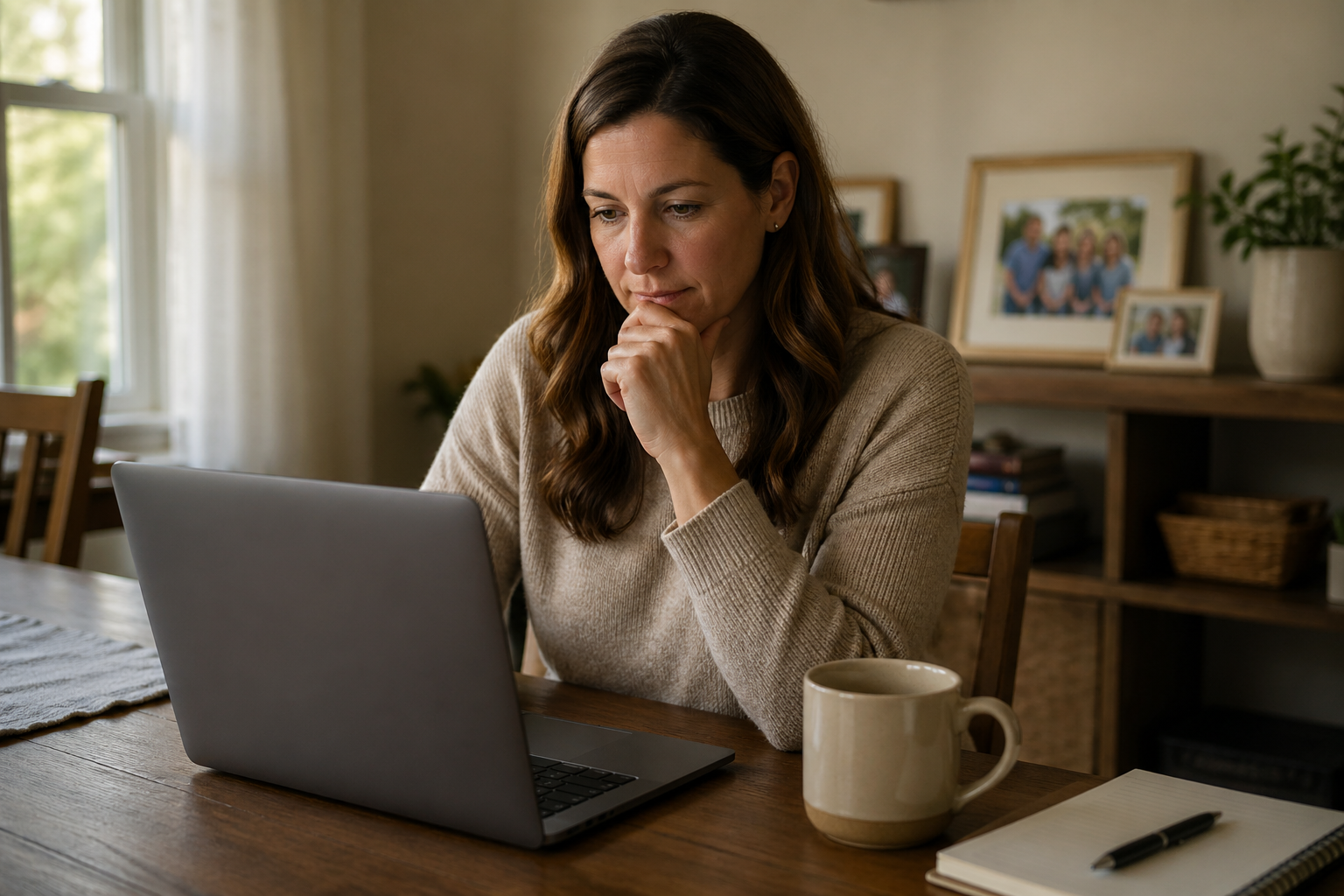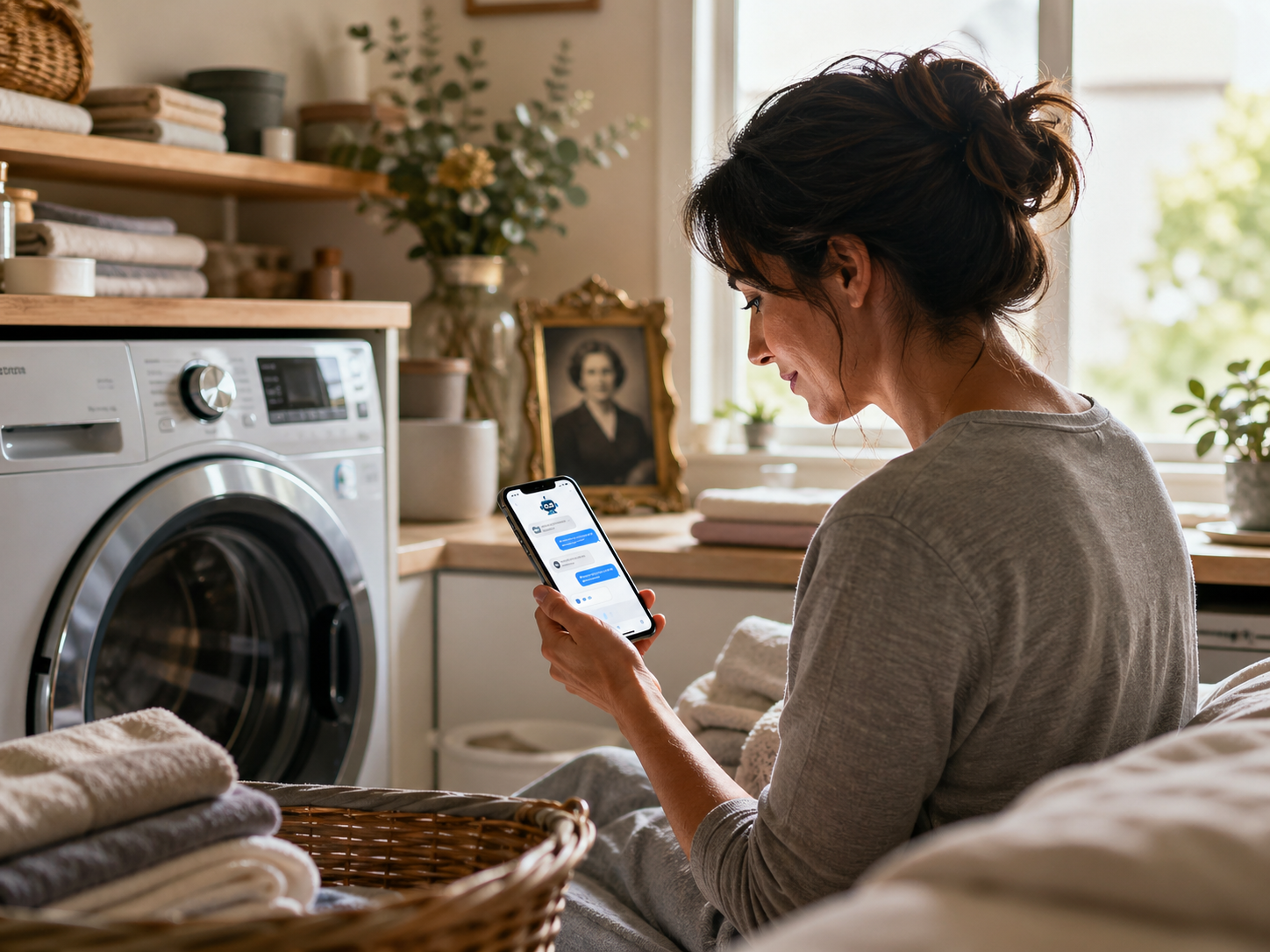
AI may be changing the world, but the most important work still happens close to home.
There is a lot of noise right now about artificial intelligence, and most evenings I notice it pressing in from every direction — headlines, group texts, podcasts, the way people at dinner parties have started asking whether our kids will even need to learn certain things anymore. Some of it is exciting and some of it is exaggerated and some of it is genuinely worth paying attention to, and underneath all of it I keep coming back to the same quiet conviction: the most important work I do isn’t happening in any of those conversations. It’s happening at home, in the ordinary hours that don’t make headlines.
Some of my favorite moments still happen at the end of the day, when everyone finds their way to the living room and the stories start before anyone sits down. That’s the work. Not the productivity stack, not the apps, not the optimization. The pile-in. The prayer. The unhurried catching-up that has no agenda and isn’t performing for anyone. AI is going to change a lot of things in the next decade, but it isn’t going to change that, and it isn’t going to build it for us either.
The home is still where the forming happens
Our children are growing up in a world where intelligent tools are normal, which means they’ll need judgment and creativity and emotional steadiness and a strong sense of who they are more than any generation before them. That’s exactly why the home matters more now, not less. The home is where children first learn what love feels like, where they watch how adults handle stress and how people repair after conflict and how decisions get made and how faith gets lived and how bodies are cared for and how money is discussed and how responsibility is carried and how joy is created in ordinary days. No tool can replace that, and honestly, no tool is trying to. We’re the ones who sometimes forget.
A chatbot can help you plan dinner, but it can’t gather your family around the table with warmth — and that distinction, simple as it sounds, is the whole thesis of this book. The tools handle the logistics. The humans handle the love. When we keep that order straight, AI becomes one of the most useful supports a parent has had in a long time. When we get it backward, we end up with a home that runs like a productivity system and feels like one too.
What AI is actually good for
Used wisely, AI can lighten the mental clutter parents carry around all day. It can help you think clearly when you’re tired. It can turn scattered thoughts into a plan, prepare you for a hard conversation instead of leaving you to react in the moment, give you language when you’re overwhelmed, and support learning and creativity and follow-through in ways that genuinely free up your attention for the people in front of you. That’s what I want from it, and that’s all I want from it.
I don’t want a home that runs like a productivity system. I want a home that feels alive — steady and capable and loving, a place where people are known and guided and challenged and forgiven and enjoyed. That kind of home doesn’t happen by accident. It’s built through attention, through repeated choices, through parents deciding that convenience won’t be the highest value in the house and then living that decision out across a thousand small moments most outsiders will never see.
The center holds
A possible home isn’t a perfect one. It isn’t always calm or quiet or free of conflict, and the seasons that test it are real. But it’s oriented — it knows what matters, it treats technology as a servant rather than a substitute, and it operates from the belief that children are worth forming, marriage is worth tending, and family joy is worth protecting even when the culture isn’t sure any of that is true anymore.
That’s why family comes first here. Not as a slogan on the wall. As the decision underneath every other decision, made again on the ordinary Tuesdays when nobody is watching. In an age of artificial intelligence, that may turn out to be one of the most consequential things any of us do.
If that’s the kind of home you’re trying to build, you’re in the right place. Welcome.
Your Top 10 Favourite Reads
Vestibulum ante ipsum primis in faucibus orci luctus et ultrices posuere cubilia Curae; Donec velit neque, auctor sit amet aliquam vel, ullamcorper sit amet ligula. Mauris blandit aliquet elit, eget tincidunt nibh pulvinar a. Donec rutrum congue leo eget malesuada. Nulla quis lorem ut libero malesuada feugiat.Vivamus magna justo, lacinia eget consectetur sed, convallis at tellus. Mauris blandit aliquet elit, eget tincidunt nibh pulvinar a. Curabitur non nulla sit amet nisl tempus convallis quis ac lectus. Curabitur non nulla sit amet nisl tempus convallis quis ac lectus.
Vivamus magna justo, lacinia eget consectetur sed, convallis at tellus. Mauris blandit aliquet elit, eget tincidunt nibh pulvinar a. Curabitur non nulla sit amet nisl tempus convallis quis ac lectus. Curabitur non nulla sit amet nisl tempus convallis quis ac lectus.
AI may be changing the world, but the most important work still happens close to home.
There is a lot of noise right now about artificial intelligence, and most evenings I notice it pressing in from every direction — headlines, group texts, podcasts, the way people at dinner parties have started asking whether our kids will even need to learn certain things anymore. Some of it is exciting and some of it is exaggerated and some of it is genuinely worth paying attention to, and underneath all of it I keep coming back to the same quiet conviction: the most important work I do isn’t happening in any of those conversations. It’s happening at home, in the ordinary hours that don’t make headlines.
Some of my favorite moments still happen at the end of the day, when everyone finds their way to the living room and the stories start before anyone sits down. That’s the work. Not the productivity stack, not the apps, not the optimization. The pile-in. The prayer. The unhurried catching-up that has no agenda and isn’t performing for anyone. AI is going to change a lot of things in the next decade, but it isn’t going to change that, and it isn’t going to build it for us either.
The home is still where the forming happens
Our children are growing up in a world where intelligent tools are normal, which means they’ll need judgment and creativity and emotional steadiness and a strong sense of who they are more than any generation before them. That’s exactly why the home matters more now, not less. The home is where children first learn what love feels like, where they watch how adults handle stress and how people repair after conflict and how decisions get made and how faith gets lived and how bodies are cared for and how money is discussed and how responsibility is carried and how joy is created in ordinary days. No tool can replace that, and honestly, no tool is trying to. We’re the ones who sometimes forget.
A chatbot can help you plan dinner, but it can’t gather your family around the table with warmth — and that distinction, simple as it sounds, is the whole thesis of this book. The tools handle the logistics. The humans handle the love. When we keep that order straight, AI becomes one of the most useful supports a parent has had in a long time. When we get it backward, we end up with a home that runs like a productivity system and feels like one too.
What AI is actually good for
Used wisely, AI can lighten the mental clutter parents carry around all day. It can help you think clearly when you’re tired. It can turn scattered thoughts into a plan, prepare you for a hard conversation instead of leaving you to react in the moment, give you language when you’re overwhelmed, and support learning and creativity and follow-through in ways that genuinely free up your attention for the people in front of you. That’s what I want from it, and that’s all I want from it.
I don’t want a home that runs like a productivity system. I want a home that feels alive — steady and capable and loving, a place where people are known and guided and challenged and forgiven and enjoyed. That kind of home doesn’t happen by accident. It’s built through attention, through repeated choices, through parents deciding that convenience won’t be the highest value in the house and then living that decision out across a thousand small moments most outsiders will never see.
The center holds
A possible home isn’t a perfect one. It isn’t always calm or quiet or free of conflict, and the seasons that test it are real. But it’s oriented — it knows what matters, it treats technology as a servant rather than a substitute, and it operates from the belief that children are worth forming, marriage is worth tending, and family joy is worth protecting even when the culture isn’t sure any of that is true anymore.
That’s why family comes first here. Not as a slogan on the wall. As the decision underneath every other decision, made again on the ordinary Tuesdays when nobody is watching. In an age of artificial intelligence, that may turn out to be one of the most consequential things any of us do.
If that’s the kind of home you’re trying to build, you’re in the right place. Welcome.
Your Top 10 Favourite Reads
Vestibulum ante ipsum primis in faucibus orci luctus et ultrices posuere cubilia Curae; Donec velit neque, auctor sit amet aliquam vel, ullamcorper sit amet ligula. Mauris blandit aliquet elit, eget tincidunt nibh pulvinar a. Donec rutrum congue leo eget malesuada. Nulla quis lorem ut libero malesuada feugiat.Vivamus magna justo, lacinia eget consectetur sed, convallis at tellus. Mauris blandit aliquet elit, eget tincidunt nibh pulvinar a. Curabitur non nulla sit amet nisl tempus convallis quis ac lectus. Curabitur non nulla sit amet nisl tempus convallis quis ac lectus.
Vivamus magna justo, lacinia eget consectetur sed, convallis at tellus. Mauris blandit aliquet elit, eget tincidunt nibh pulvinar a. Curabitur non nulla sit amet nisl tempus convallis quis ac lectus. Curabitur non nulla sit amet nisl tempus convallis quis ac lectus.
Written by : michellectullis@gmail.com
Subscribe To My Newsletter
BE NOTIFIED ABOUT BOOK SIGNING TOUR DATES
Donec fringilla nunc eu turpis dignissim, at euismod sapien tincidunt.